
A drained bog can keep warming the planet for centuries
A global reconstruction traces how peatland drainage since 1800 changed emissions of two greenhouse gases and why old ditches still matter.

Share
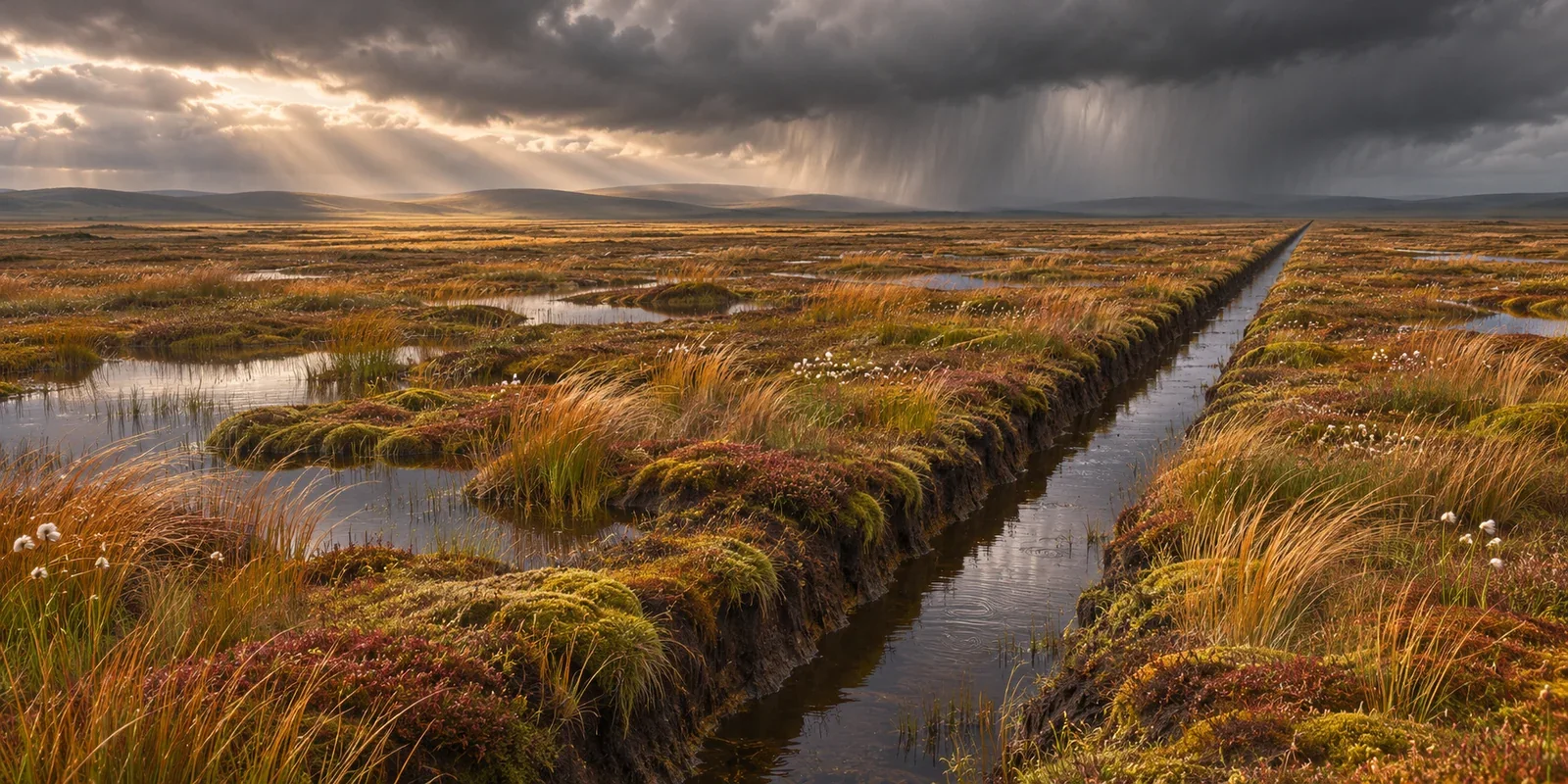
A drainage ditch can keep changing the atmosphere generations after it was dug. Lowering a bog’s water table lets oxygen reach plant matter that accumulated over thousands of years. Microbes break that material down and release carbon dioxide. Drainage also tends to reduce methane emissions from the soil. To work out how much the world’s drained peatlands have warmed the climate, researchers had to account for both gases. MIT’s account of the study
Reconstructing two centuries of drainage
The team combined a history of drainage from 1800 to 2020 with measurements of greenhouse gas exchange and models of how those emissions change as the water table falls. It included drainage ditches themselves, which can release methane even as the surrounding peat releases less of it. The authors estimate that drainage across roughly 0.4 to 0.5 percent of global land area produced about 2.7 percent of the industrial-era change in Earth’s energy balance caused by human activity. Their estimated range was 1.8 to 3.6 percent. Research paper in Nature
What happens to the old ditches
In a scenario where existing peatlands stayed drained, their cumulative warming effect could nearly double by 2100 even if people drained no additional land. That projection depends on future water levels. Raising the water table again would limit how much buried carbon comes into contact with oxygen. The study gives an old piece of land management a present-day consequence. An agricultural ditch dug decades ago can still influence how much carbon leaves a field this year. Research paper MIT’s explanation of rewetting


Comments 0
Sign in to like, comment and reply.
Sign in to commentNo comments yet. Be the first to comment.